
Feedback Pocket
Learn how the moment felt and what to improve.
2 questions · about 1 min
Preview a template, adapt the questions, and collect answers.
Short surveys for feedback, onboarding, and clear messaging. Preview the questions before choosing.
Learn how the moment felt and what to improve.
2 questions · about 1 min
Identify a specific milestone, its main obstacle, and a suggested improvement.
4 questions · about 2 min
Find misunderstandings and words that need clarification or proof.
4 questions · about 2 min
Choose a goal to narrow the gallery. Choose it again to see all templates.
Set price points, packaging, and willingness-to-pay boundaries.

Find acceptable price ranges and tension points before committing to packaging or launch price.
Identify the package bundle most likely to maximize conversion, expansion, and pricing confidence.
Pick the flavor, pack, claim, and channel combination most likely to win a first shelf test.

Price and package live research feeds, expert panels, and memo-ready diligence deliverables.
Estimate demand curves across price points with purchase-intent follow-up and segment splits.
Rank features, benefits, and investments by customer value.

Force trade-offs across candidate features and turn the result into a ranked roadmap.
Choose the launch trim and premium feature bundle with the strongest share and rejection-risk profile.
Prioritize the workflow bundle that clears value, auditability, and implementation-risk thresholds.
Decide which product or service concept should advance.
Compare two plain-text offers, including neither and no preference, and capture the reason for the choice.
Diagnose loyalty, satisfaction, effort, and recovery opportunities.
Spot satisfaction movement, route poor experiences, and build a recurring recovery report.
Learn how the moment felt and what to improve.
Learn the main reason a customer left, what they chose instead, and what was missing.
Measure loyalty while capturing the reasons, blockers, and segments behind the score.
Understand how teams want survey evidence to connect with BI, CRM, warehouse, and agent workflows.
Explain segments, demand, competitors, and behavior.
Compare won, lost, and no-decision accounts to isolate sales friction and competitor strengths.
Identify the buying step and evidence needed to move a purchase forward.
Find claims and language that resonate, confuse, or need proof.
Identify the exact words to keep, rewrite, prove, or remove before launch.
Find misunderstandings and words that need clarification or proof.
Compare value propositions and claims for clarity, credibility, and purchase motivation.
Compare translated claims for meaning, tone, credibility, and market-specific interpretation.
Track awareness, consideration, preference, trust, and brand language across segments over time.
Build evidence-backed segments, personas, and ideal customer profiles.
Identify the best early customer profile with need intensity, budget, urgency, and adoption constraints.
Replace lightweight personas with evidence-backed roles, jobs, pains, buying triggers, and objections.
Track engagement, workload, enablement, and retention signals.
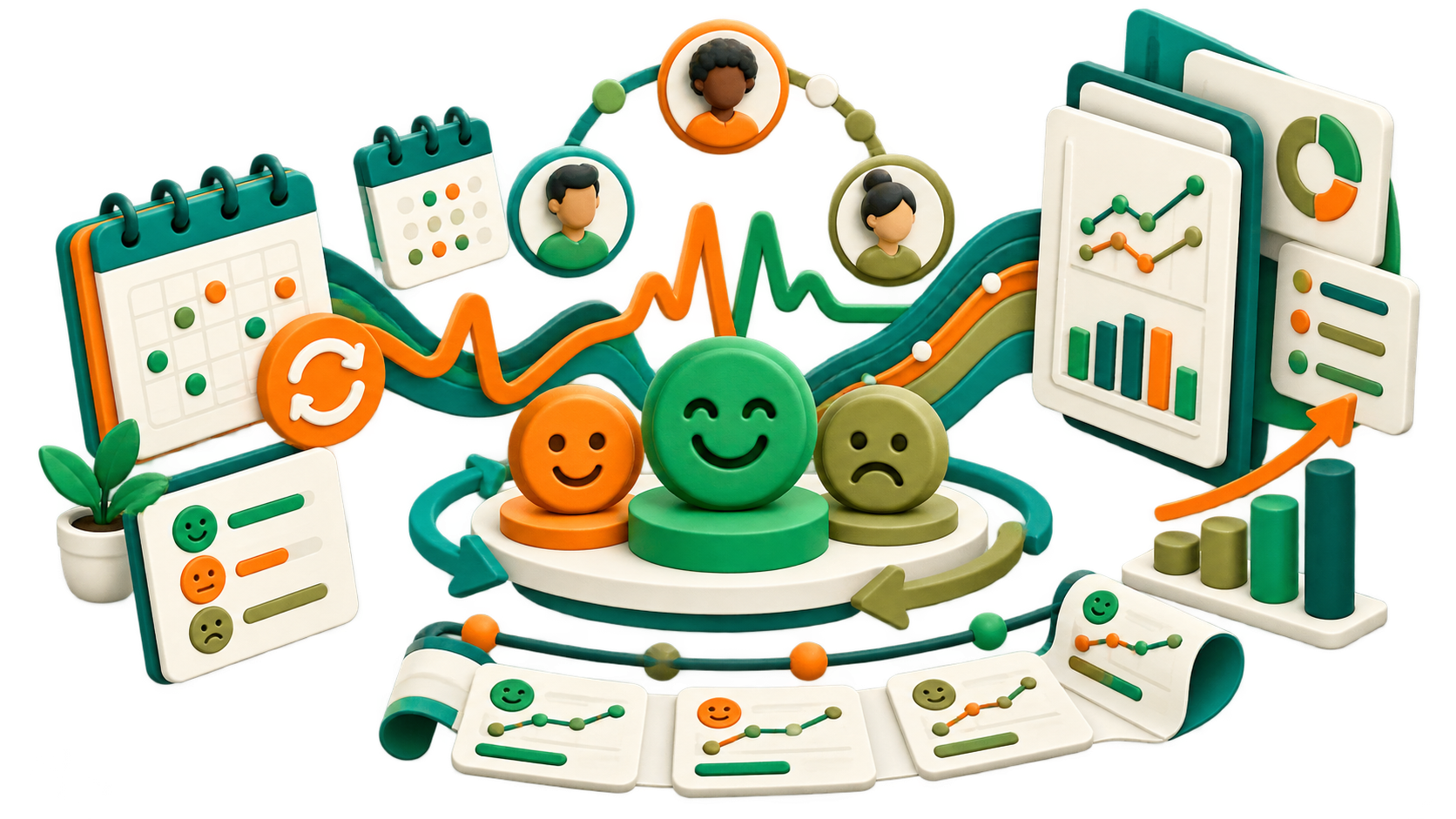
Give leaders a recurring engagement signal with enough history to separate noise from durable movement.
Assess usability, events, purchases, and other key interactions.
Identify a specific milestone, its main obstacle, and a suggested improvement.
Separate attempted application from barriers before changing a training program.
Choose what to keep or improve for the next event.
Identify obstacles to the first useful outcome.
Improve webinar content and explanations.
Review evidence quality, confidence, provenance, and readiness.
Check the decision, audience, measurement, and ownership foundations before starting a study.
Stress-test survey traffic with attention, duplicate, plausibility, and open-text quality checks.
Turn a research question into an approved, decision-ready study.
Run a moderated live research stream with poll moments, segment cuts, and real-time decisions.
Approve a governed study brief before screening or outreach begins.
Surface one stakeholder's view of the evidence, alignment, and unresolved assumptions behind a decision.
Collect the goal, deadline, constraints, and desired next step before a service conversation.
Turn a business decision into research goals, constraints, sample plan, and agent-ready deliverables.
Collect the data, charts, quotes, and caveats needed for a board or client-ready report.
Recruit and interview qualified experts for calibrated judgment.
Separate confident knowledge from guesswork and route high-trust respondents to premium surveys.
Recruit scarce expert segments through controlled nominations, consent, and quality scoring.
Create a documented include, exclude, or follow-up-needed recommendation for human review.
Run a consistent human-led conversation and hand source-labeled evidence to a reviewer.
Scope a live expert panel for diligence, competitor intelligence, or emerging-market questions.
Prefer to start from scratch, or curious which question types power these templates?